




Introduction: Why Product Visualization is Essential in the Digital Age
In today's digital age, product visualization has become a crucial element for businesses aiming to stay ahead of the curve. It's no longer just about showcasing products; it's about creating immersive brand experiences that captivate customers and influence their purchasing decisions. The evolution of display technologies, such as 2D, 3D, and transparent OLED, has brought product visualization to new heights, making it a strategic tool across various industries.
Whether it’s enhancing online shopping, enriching marketing campaigns, or elevating in-store displays, visualization technologies are key to engaging consumers. High-end display technologies, such as transparent OLED, have revolutionized how we interact with products, merging traditional display advantages with cutting-edge visual capabilities.
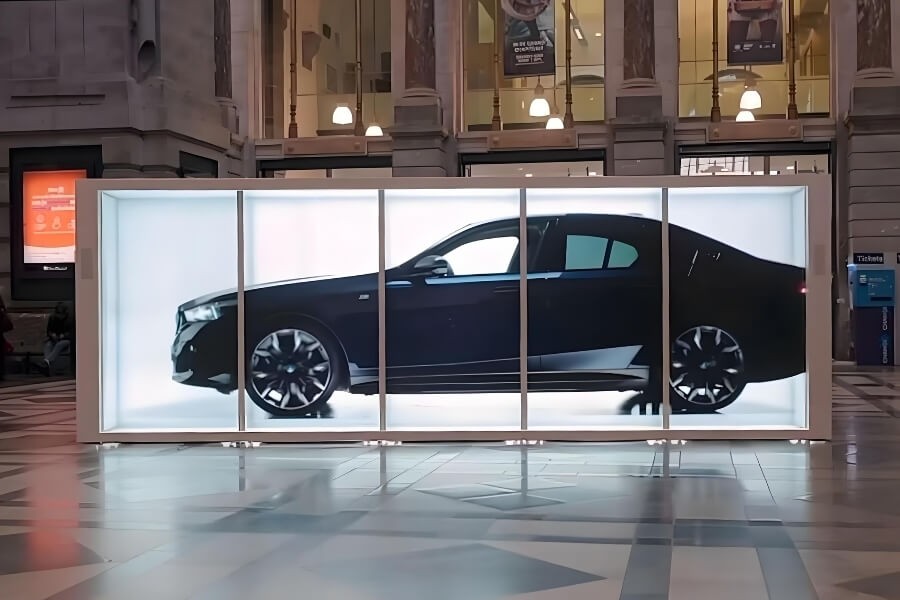
3D Product Visualization: Creating Realistic and Interactive Experiences
Creating lifelike 3D product visualizations requires a combination of advanced techniques, from high-precision modeling to realistic rendering. Here's how to bring 3D visuals to life:
Achieving Photorealism
To make a 3D model look real, every detail counts. High-precision modeling ensures that every curve, texture, and reflection is captured, providing a faithful representation of the actual product. Lighting and textures play a significant role in achieving photorealism, as they simulate real-world conditions, giving the product a tangible feel. Using advanced rendering techniques such as ray tracing can elevate the visualization further, enhancing light behavior and creating realistic shadows.
Cross-Platform Optimization
As 3D models are showcased across different devices and platforms, optimizing these visuals for fast loading and smooth performance becomes essential. Simplifying the mesh and compressing textures are some of the ways to ensure that the visual quality is maintained while reducing the file size for web and mobile compatibility. Implementing smart loading techniques, such as progressive loading, enhances the user experience by loading detailed textures and elements as needed.
AI-Driven Innovation
AI is significantly transforming the way 3D models are created and refined. Tools powered by AI can automatically generate 3D models from text descriptions or images, reducing the modeling time by 60-80%. Real-time generation and iteration capabilities allow designers to make adjustments on the fly, speeding up the production process. Neural Radiance Fields (NeRF) technology is one such example, enabling photo-realistic rendering with incredible detail and accuracy.
Effectiveness Evaluation
Tracking user interaction with 3D visuals provides key insights into their effectiveness. Metrics such as dwell time, interaction rate, and sales conversion rate can help businesses assess the impact of 3D visuals. A reduction in return rates is also a good indicator that the 3D visuals are accurately representing the products, reducing the gap between customer expectations and the actual product.
2D vs. 3D Visualization: Choosing the Right Technology for Your Needs
Both 2D and 3D visualization have their strengths and ideal use cases, depending on the product type and target audience.
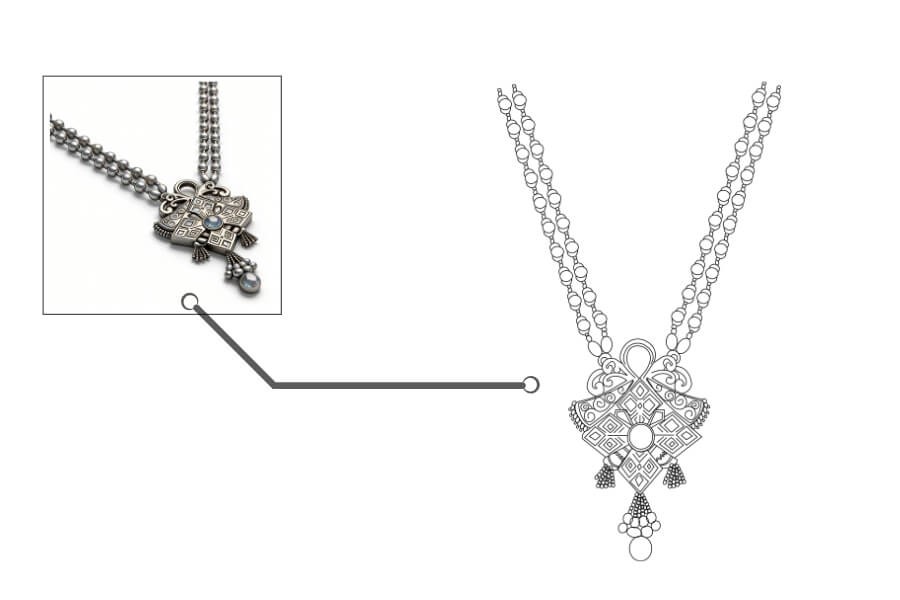
Advantages of 2D Visualization
2D visualization is ideal for abstract concepts, services, or software, where a straightforward and clear explanation is needed. It’s cost-effective, quicker to produce, and works well for brand storytelling, especially on platforms like social media where engagement and attention spans are limited.
Advantages of 3D Visualization
For tangible products, especially those with intricate details or mechanical functions, 3D visualization is the preferred choice. 3D visuals offer immersive experiences, allowing customers to explore a product from multiple angles or simulate its use in real-life scenarios. Whether it’s showcasing a high-end luxury item or a piece of machinery, 3D visualization provides a more accurate, interactive, and engaging experience.
Transparent OLED Displays: Revolutionizing Product Visualization
Transparent OLED technology is a game-changer in the world of product visualization, offering unparalleled design flexibility and exceptional visual quality.
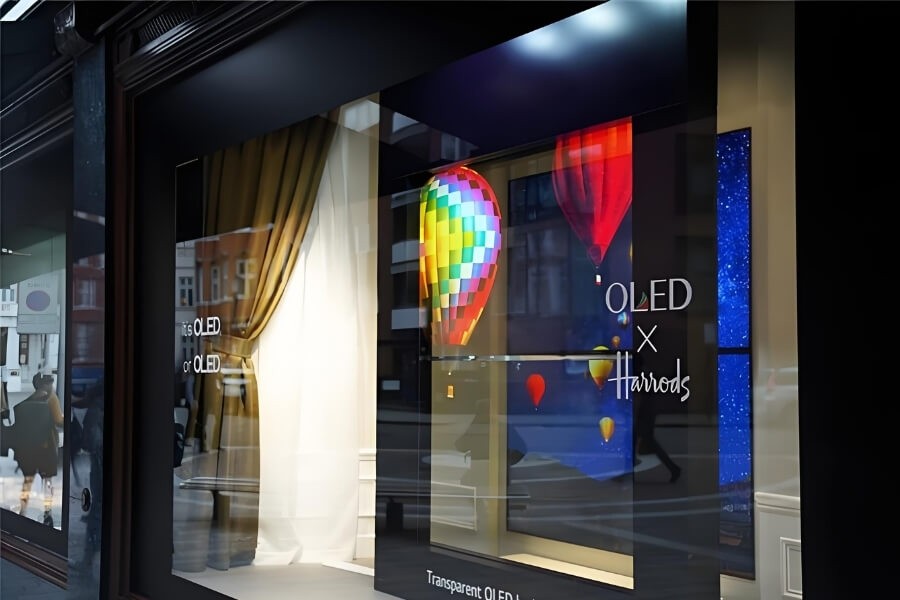
Key Advantages of Transparent OLED
Transparent OLED displays bring a host of advantages to industries looking for cutting-edge visualization tools:
- Exceptional Visual Quality: Self-illuminating pixels allow for true blacks and an infinite contrast ratio, while ultra-thin, flexible, and transparent designs enable innovative applications.
- Transparency Control: Seamlessly switch between transparent and display modes to create new visual effects.
- Design Flexibility: Support for curved, foldable, and custom-shaped displays.
- Energy Efficiency: Pixel-level control ensures that only the necessary pixels are lit, improving energy savings.
Comparison with Traditional Display Technologies
- Contrast and Viewing Angles: OLEDs offer superior contrast ratios and viewing angles compared to LCD and LED.
- Response Time: OLEDs have a response time of up to 0.1ms, which is far superior to traditional displays.
- Color Accuracy: OLEDs cover a wider color gamut, making the visuals more vibrant and accurate.
Innovative Applications of Transparent OLED in Commercial Displays
Transparent OLED displays are redefining commercial product visualization:
- Smart Retail Windows: Combine transparent displays with physical products for interactive storefronts.
- Interactive Display Walls: Multiple screens working together to create immersive brand experiences.
- High-End Commercial Spaces: Integrate information displays seamlessly into design elements, enhancing the aesthetic of luxury environments.
How Transparent OLED is Revolutionizing Large-Scale Displays
Transparent OLED technology can be integrated into large-scale display systems, offering a seamless blend of functionality and aesthetics. This integration is especially useful for commercial applications such as:
- Interactive Kiosks: Transparent OLED screens provide an interactive experience for customers in retail spaces or public areas, offering real-time information while maintaining transparency.
- Digital Advertising Walls: These displays can be used for creative advertising in high-traffic areas, providing a clear view of the environment while showing dynamic content.
- Smart Retail Solutions: Transparent OLEDs can be embedded into storefronts, allowing for seamless integration of digital information with the products on display.
AI-Driven Visualization: The Future of Smart Product Displays
AI is increasingly playing a significant role in shaping the future of product visualization. AI-driven tools are enhancing 3D modeling and rendering processes, making it easier and faster to create high-quality visuals.
Personalized Product Experiences
AI can help create personalized visual experiences by adjusting content and display angles based on user behavior and preferences. This allows businesses to deliver customized product presentations that appeal to individual customers.
Integration with AR and VR
AI-driven visualization can be integrated with augmented reality (AR) and virtual reality (VR) technologies, providing immersive, interactive product experiences. This fusion of AI with AR/VR in product visualization offers consumers an opportunity to virtually try products before making a purchase decision, especially in industries like fashion and home decor.
Real-World Applications: How OLED is Changing Retail and Commercial Displays
The implementation of OLED display technology, especially in transparent OLEDs, is transforming how businesses approach product visualization across various industries.
Smart Retail Solutions
Transparent OLED screens are used in high-end retail environments, providing customers with interactive and informative product displays without blocking the physical items. This technology enhances customer engagement, allowing them to learn about the products while viewing them from multiple angles.
Automotive Showrooms
In the automotive industry, transparent OLED video walls are used to showcase vehicle specifications, technical data, and brand stories in a visually stunning way. This not only attracts customers but also enhances their overall showroom experience.
Conclusion: Shaping the Future of Product Visualization
As product visualization continues to evolve, technologies like 2D, 3D, and transparent OLED displays will continue to lead the way. These technologies offer innovative solutions that blend the physical and digital worlds, providing a more immersive and engaging experience for customers. AI-driven tools, along with real-time rendering and interactive features, are expected to play an even bigger role in the future of product visualization, enabling businesses to deliver personalized and compelling visual experiences that drive sales and enhance brand engagement.
By embracing these advancements, businesses can stay ahead in a competitive market, providing customers with a dynamic and interactive experience that leaves a lasting impression.
RusinDisplay delivers professional OLED and Transparent Display solutions with rapid 3D scene creation, reliable performance, and support from over 120 global brands. Our systems help businesses increase foot traffic and achieve fast ROI while enjoying steady technical support and seamless after-sales service. With AI-driven interaction and a Tech in Nature design philosophy, we create visual experiences that blend innovation with modern commercial environments.
FAQ
Q1. What is product visualization?
Product visualization refers to the use of digital tools to create realistic representations of a product before it is manufactured. It helps businesses showcase their designs, allowing customers to interact with and explore products in a virtual environment.
Q2. What is visualization with an example?
Visualization is the process of creating images or models to represent an object or concept. For example, 3D product visualization enables customers to explore a product in detail, like a car’s interior, before making a purchase decision.
Q3. What is the concept of visualization?
The concept of visualization involves using images, videos, or 3D models to present a concept or idea clearly. It helps communicate complex information in an easy-to-understand format, making it useful in design, marketing, and decision-making.