




Why Reflective LCD Displays Work Differently from Traditional Screens
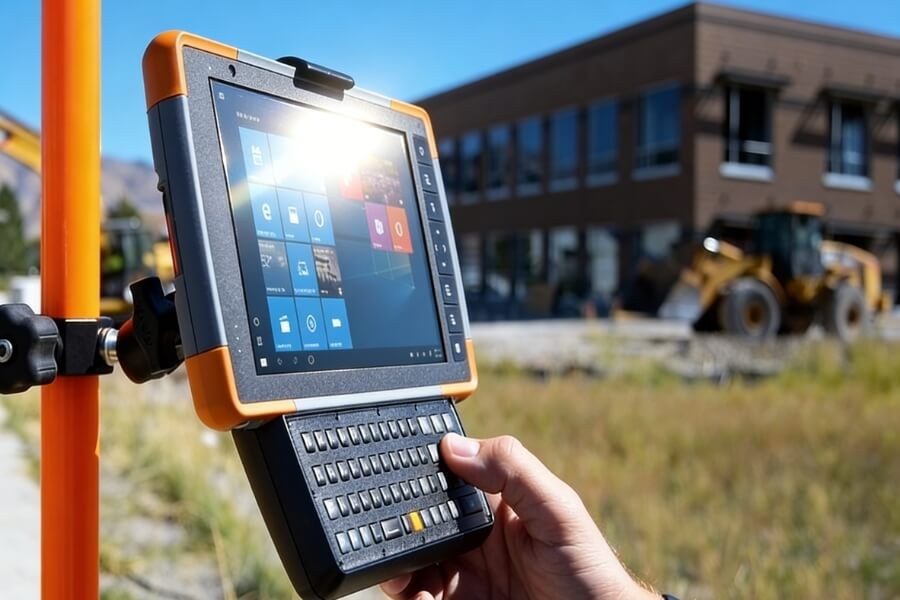
A reflective LCD display uses ambient light instead of a backlight to create images. This design removes one of the most power-intensive components in traditional displays.
As a result, reflective LCDs reduce power consumption and improve visibility in bright environments. They are commonly used in outdoor devices, low-power systems, and applications where long operating time is more important than color intensity.
If your project requires strong daylight readability or extended battery life, reflective LCD is often the more practical option.
How a Reflective LCD Display Works
Reflective LCD technology reuses available light instead of generating it internally. This approach directly affects both energy consumption and display performance.
Light Path and Image Formation
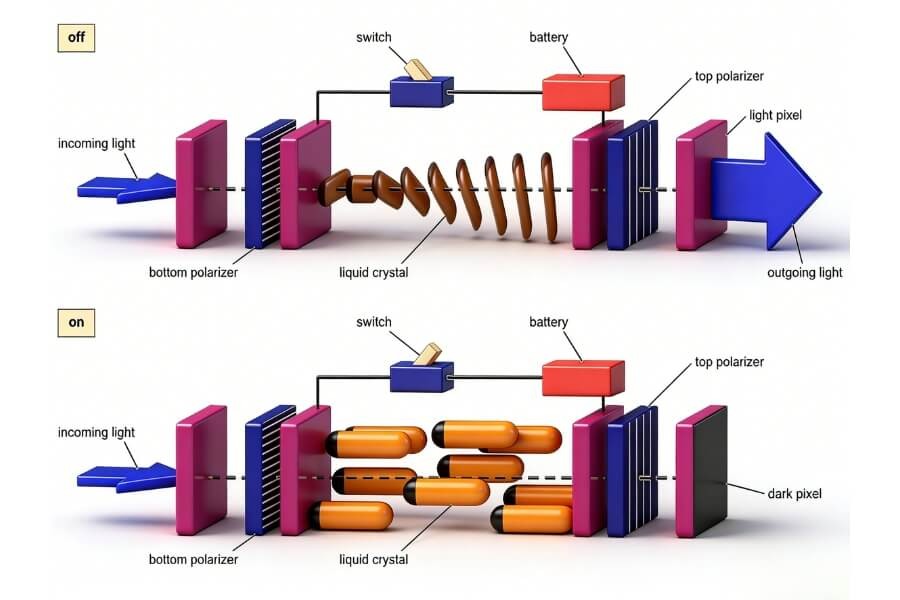
The process follows a clear sequence:
- Ambient light enters from the front of the display
- Light passes through a polarizer, which aligns the light waves
- It then travels through the liquid crystal layer, where pixel states control light transmission
- The light reaches a reflective layer behind the panel
- The mirror reflects the light back through the same layers to the viewer
Because light passes through the liquid crystal layer twice, the optical path is effectively doubled. This improves contrast under strong lighting conditions and makes the image more visible in direct sunlight.
What This Means in Practice
- No backlight reduces power consumption and heat generation
- The mirror layer increases light efficiency instead of relying on brightness output
- Image clarity improves as ambient light increases
This design makes reflective LCD a strong choice for outdoor installations where backlit displays typically struggle.
What Makes Up a Reflective LCD Display
A reflective LCD module is built from multiple functional layers, each affecting image clarity and efficiency.
Core Components and Their Roles
- Front polarizer controls incoming light direction and reduces glare
- Liquid crystal layer modulates light to form images
- ITO electrodes drive pixel switching and image updates
- Alignment layers ensure consistent liquid crystal orientation, improving uniformity
- Reflective mirror layer reflects light back to the viewer, enabling visibility without backlight
- Spacers maintain a uniform cell gap, stabilizing display performance
In color models, a color filter layer is added. This enables color display but reduces brightness because part of the light is absorbed.
Some advanced designs also include retardation films, which improve viewing angles and contrast consistency.
Design Insight
Each structural decision affects performance:
- Higher reflectivity improves brightness in outdoor environments
- Additional optical layers improve image quality but reduce light transmission
- Simpler structures improve efficiency and reliability
This is why reflective LCD designs prioritize efficiency over visual intensity.
Why Reflective LCD Displays Are Ideal for Low-Power and Outdoor Use
Reflective LCDs are optimized for environments where efficiency and visibility are critical.

Ultra-Low Power Consumption
Removing the backlight significantly reduces energy usage.
- Power consumption is far lower than transmissive LCDs
- Suitable for battery-powered and solar-powered devices
- Reduces maintenance cycles in remote installations
If your device operates in remote locations or relies on limited power sources, reflective LCD helps extend operational life.
Excellent Sunlight Readability
Reflective LCDs use ambient light as an advantage.
- No washout effect under direct sunlight
- Visibility improves with stronger light conditions
- Reliable performance in outdoor environments
If your display is exposed to daylight for most of its operation, reflective LCD provides more stable readability than backlit alternatives.
Thin and Lightweight Structure
Without a backlight module, the display becomes structurally simpler.
- Reduced thickness and weight
- No need for heat dissipation design
- Better resistance to environmental stress
This makes reflective LCD suitable for portable devices and rugged industrial equipment.
Long Lifespan and Stability
Reflective LCD avoids several long-term failure risks.
- No burn-in issues
- No backlight degradation over time
- Stable operation across temperature variations
This improves reliability in industrial and long-duration applications.
When Reflective LCD Displays May Not Be the Best Choice
Reflective LCD performs well under the right conditions, but it is not suitable for all environments.
Key Trade-Offs
- Dependence on ambient light means visibility decreases in dark environments
- Limited color performance makes it less suitable for visual-rich displays
- Lower contrast indoors compared to backlit screens
Practical Selection Guidance
- Use reflective LCD for outdoor, low-power, or always-on devices
- Use transflective LCD when lighting conditions change frequently
- Use OLED or traditional LCD when color accuracy and visual impact are required
Choosing the correct display depends on the installation environment and user expectations.
Reflective LCD vs Other Display Technologies — How to Choose
Different display technologies solve different problems. Selection should be based on real use conditions.
Key Comparison
| Technology | Light Source | Power Consumption | Outdoor Visibility | Color Performance | Typical Use |
|---|---|---|---|---|---|
| Reflective LCD | Ambient light | Very low | Excellent | Limited | Meters, ESL, outdoor devices |
| Transmissive LCD | Backlight | High | Poor in sunlight | Strong | TVs, indoor displays |
| Transflective LCD | Ambient + backlight | Medium | Good | Moderate | Automotive, GPS |
| E-paper | Ambient light | Extremely low | Excellent | Limited | E-readers, labels |
| OLED | Self-emissive | Medium to high | Moderate | Excellent | Smartphones, premium displays |
Selection Insight
- Choose reflective LCD when power efficiency and sunlight readability are critical
- Choose OLED or LCD when color depth and visual experience are priorities
- Choose LED or video walls for large-scale commercial display applications
Where Reflective LCD Displays Are Commonly Used
Reflective LCD is widely used in environments where energy efficiency and readability are more important than visual intensity.
Retail and Commercial
- Electronic shelf labels support frequent updates with minimal power consumption
- Outdoor signage remains readable under direct sunlight without requiring high brightness
Consumer Electronics
- Calculators and watches operate for years on small batteries
- Wearables provide always-on display with low energy usage
Industrial and IoT
- Smart meters operate continuously without external power supply
- Solar systems integrate naturally with low-power displays
- Remote monitoring devices reduce maintenance requirements
Transportation
- E-bike and scooter dashboards remain visible under daylight
- Automotive auxiliary displays provide simple information with low energy demand
Healthcare Devices
- Glucose meters and portable instruments require reliable, low-power display solutions
How Reflective LCD Technology Is Evolving
Reflective display technology continues to improve to address limitations in color and adaptability.
LPRD and Color Reflective Displays
Low Power Reflective Displays improve color capability while maintaining energy efficiency.
- Micro-cavity and interferometric structures enable color without backlight
- Improved visual performance expands use cases in wearables and commercial displays
Intelligent Display Optimization
Future systems are expected to adapt to environmental conditions.
- Dynamic contrast adjustment improves readability in changing light
- Adaptive refresh rates reduce power consumption
- Smarter control improves overall display efficiency
Integration with Modern Display Systems
Reflective LCD is often used alongside other display technologies.
- It complements OLED and LCD systems in hybrid applications
- Used where efficiency is more important than visual intensity
- Helps balance performance, cost, and energy consumption
FAQ
Q1: What is a reflective LCD display used for?
Reflective LCD displays are used in applications where power efficiency and sunlight readability are critical. They are commonly found in smart meters, wearable devices, and electronic shelf labels, where long battery life and stable outdoor visibility are required without relying on a backlight system.
Q2: Can reflective LCD displays work at night?
Reflective LCD displays depend on ambient light, so visibility decreases in dark environments. To maintain readability, many systems use a frontlight or adopt a transflective design, allowing the display to operate effectively in both bright and low-light conditions.
Q3: What is the difference between reflective LCD and e-paper displays?
Reflective LCD displays support faster refresh rates and simple animations, making them suitable for dynamic information. E-paper consumes less power for static content and retains images without power. The best choice depends on whether the application prioritizes refresh speed or energy efficiency.
Q4: Do reflective LCD displays support color?
Some reflective LCDs support color using filters or advanced technologies such as LPRD. However, color saturation is typically lower than transmissive LCD or OLED displays, making them more suitable for information-focused applications rather than high-impact visual content.
Q5: How long do reflective LCD displays last?
Reflective LCD displays typically have a lifespan of 5 to 10 years or more. Without a backlight, they avoid brightness degradation and reduce thermal stress, resulting in stable long-term performance in industrial, outdoor, and continuous-use environments.
How to Choose the Right Display for Your Project
Reflective LCD is the right choice when your project requires low power consumption, strong outdoor readability, and long-term operational stability.
However, many commercial environments require higher brightness, stronger visual impact, and interactive capability. In retail spaces, exhibitions, and digital signage projects, display performance is not only about efficiency but also about engagement.
RUSINDISPLAY delivers professional OLED, Transparent Display, and Indoor LCD solutions with rapid 3D scene creation, reliable performance, and support from over 120 global brands. Our systems help businesses increase foot traffic and achieve fast ROI while maintaining stable operation and efficient project delivery. Whether you are planning a digital signage network or an immersive retail display, our solutions provide flexible integration across a wide range of commercial environments. With AI-driven interaction and a Tech in Nature design approach, we create visual systems that combine technical performance with modern design expectations.