




Modern LCD display systems rely on interface technologies to transfer image data between processors and display panels. The interface determines how visual information travels through the system and directly affects performance, stability, and hardware architecture.
As display resolution and refresh requirements continue to increase, interface technologies must support higher bandwidth and stronger signal integrity. Choosing the right interface helps ensure reliable image transmission and long-term system stability.
This article explains how different LCD display interfaces work and where they are commonly used. The goal is to help engineers, system integrators, and project planners better understand how interface selection influences real-world display performance.
RUSINDISPLAY has supported display deployments across retail digital signage, interactive terminals, and architectural installations. These real-world projects provide practical insight into how interface technologies perform in commercial display environments.
What Is an LCD Interface and How Does It Work
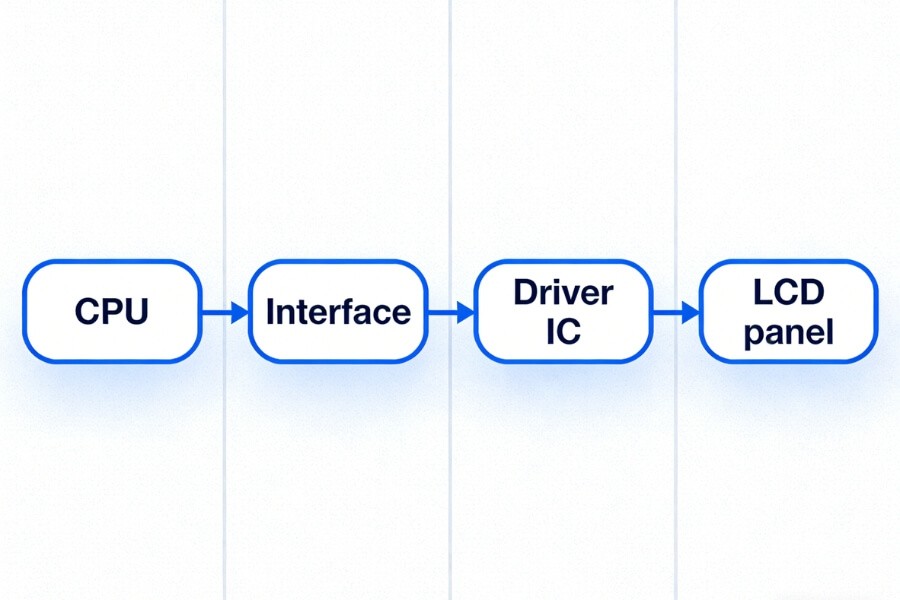
An LCD interface is the connection that allows a processor or controller to communicate with a display panel. It defines the electrical signals, wiring structure, and communication method used to transfer image data.
The interface determines how pixel information travels from the graphics processor to the display driver. It also influences bandwidth capacity, cable complexity, and signal reliability.
A simple way to understand the concept is to view the interface as the physical communication channel that carries visual information from the computing system to the screen.
How LCD Display Interfaces Are Classified
LCD display interfaces can be classified based on their location within a device and the type of data they transmit.
Some interfaces connect internal components inside a device, while others connect external signal sources such as computers or media players.
Internal vs External Display Interfaces
Internal interfaces connect the display module to the internal controller board of a device.
Common internal interfaces include
- SPI
- I2C
- RGB
- LVDS
- MIPI DSI
- eDP
External interfaces connect displays to external video sources.
Typical external interfaces include
- HDMI
- DisplayPort
- DVI
- VGA
- USB-C
Universal Interfaces vs Image Transfer Interfaces
Interfaces can also be grouped based on their communication purpose.
Universal interfaces handle device configuration and control commands. Image transfer interfaces transmit continuous pixel data required for displaying graphics or video.
Universal interfaces include
- SPI
- I2C
- UART
Image transfer interfaces include
- RGB
- LVDS
- MIPI DSI
- eDP
Low Speed LCD Interfaces for Small Displays
Low bandwidth interfaces are typically used for compact displays or embedded control panels where continuous video streaming is not required.
SPI Interface for Small LCD Displays
SPI is a synchronous serial communication interface widely used in embedded electronics. It transfers data using a master-slave structure and typically uses four signal lines.
SPI works well for small displays because the wiring structure is simple and the communication method is predictable. However the available bandwidth limits its ability to transmit large image streams.
In practical systems SPI is often used for compact information displays, wearable devices, and control panels that display simple graphics or text.
Some intelligent display modules include internal frame buffers. In these systems the SPI interface sends commands while the display hardware renders the visual content locally.
I2C Interface in LCD Systems
I2C is a two-wire communication interface designed for device configuration and low-speed data exchange.
It is commonly used to control display components such as touch controllers, brightness drivers, and configuration registers.
Although I2C is essential for display system control, it is not designed to transfer full image data streams.
UART Interface in Intelligent Display Modules
UART is an asynchronous serial interface that communicates using transmit and receive signals.
Many intelligent display modules use UART to receive high-level control commands from a host processor. The internal display controller interprets these commands and generates the visual output.
This architecture reduces software complexity and simplifies system integration.
High Speed Interfaces for LCD Image Transmission
High resolution displays require continuous pixel data transmission. High speed interfaces are designed to support the bandwidth required for modern display systems.
RGB Interface for Parallel Image Transmission
RGB interfaces transmit pixel data through parallel signal lines representing red, green, and blue color channels.
The interface is widely used in small embedded systems because it provides direct communication with minimal processing delay.
In industrial control panels and compact touch displays RGB connections often deliver reliable real time image updates.
Because RGB requires many parallel signal lines it becomes less practical for large displays or long transmission distances.
LVDS Interface for Industrial Display Systems
LVDS uses differential signaling to transmit high speed image data while minimizing electromagnetic interference.
This architecture improves signal stability and allows reliable transmission across longer cable distances.
LVDS has become a long standing standard in industrial display systems. It is widely used in medical equipment displays, transportation systems, factory control panels, and digital signage installations.
Many commercial LCD display systems including large indoor signage platforms developed by RUSINDISPLAY rely on LVDS architecture to ensure stable image transmission.
MIPI DSI Interface for Compact High Resolution Displays
MIPI DSI was originally developed for smartphones and mobile computing devices.
The interface allows high resolution displays to operate with fewer signal lines, which simplifies internal wiring inside compact devices.
Today MIPI DSI is widely used in smartphones, tablets, embedded computers, and portable display devices where space efficiency is important.
Industrial embedded platforms are gradually adopting MIPI interfaces as processor technology continues to evolve.
eDP Interface for Modern High Resolution Displays
Embedded DisplayPort is designed to support high resolution displays with improved power efficiency.
It allows modern processors to communicate with display panels using a high bandwidth digital connection.
eDP also supports panel self refresh technology which reduces power consumption when displaying static images.
Because of these advantages eDP is increasingly used in high resolution digital signage systems and interactive display terminals.
Vx1 Interface for Ultra High Resolution Displays
Vx1 is a very high speed differential interface used in large scale high resolution display panels.
The technology is commonly found in ultra large displays, professional broadcast monitors, and advanced video wall systems.
External Display Interfaces
External interfaces connect display systems to video sources such as computers or media players.
HDMI Interface for Multimedia Displays
HDMI is one of the most widely used display interfaces in consumer electronics and digital signage.
It transmits high definition video and audio signals through a single cable and supports modern high resolution formats.
Many commercial display systems support HDMI input because it allows simple connection to media players and computers.
DisplayPort Interface for Professional Displays
DisplayPort supports higher bandwidth and allows multiple displays to connect through a single output using multi stream technology.
The interface is widely used in professional computing environments and high resolution workstations.
DVI Interface for Early Digital Displays
DVI was one of the earliest digital display interfaces. It was widely used in computer monitors before newer interfaces such as HDMI and DisplayPort became common.
VGA Interface for Legacy Display Systems
VGA is an analog display interface that transmits image signals using voltage levels.
Because analog signals are more sensitive to interference and resolution limitations, VGA is gradually disappearing from modern display systems.
USB-C Interface for Single Cable Display Connections
USB-C allows video transmission, data communication, and power delivery through a single cable.
In commercial display installations this simplifies system setup and reduces cable complexity.
Interactive kiosks, conference displays, and portable display terminals often benefit from USB-C because installation becomes faster and more flexible.
Some modern RUSINDISPLAY display platforms support USB-C connectivity to simplify integration with laptops and media players.
LCD Display Industry Trends
Display technology continues to evolve as commercial environments demand brighter, thinner, and more intelligent display systems.
Digital Signage Display Trends
Digital signage installations now emphasize higher brightness, narrow bezels, and improved system reliability.
Software integration is also becoming increasingly important as displays transform into intelligent information platforms.
Advances in LCD Video Wall Technology
Modern video wall systems focus on energy efficiency, improved monitoring systems, and more reliable signal transmission.
These developments require interface technologies capable of supporting large scale high resolution displays.
Transparent Display Technology in Modern Architecture
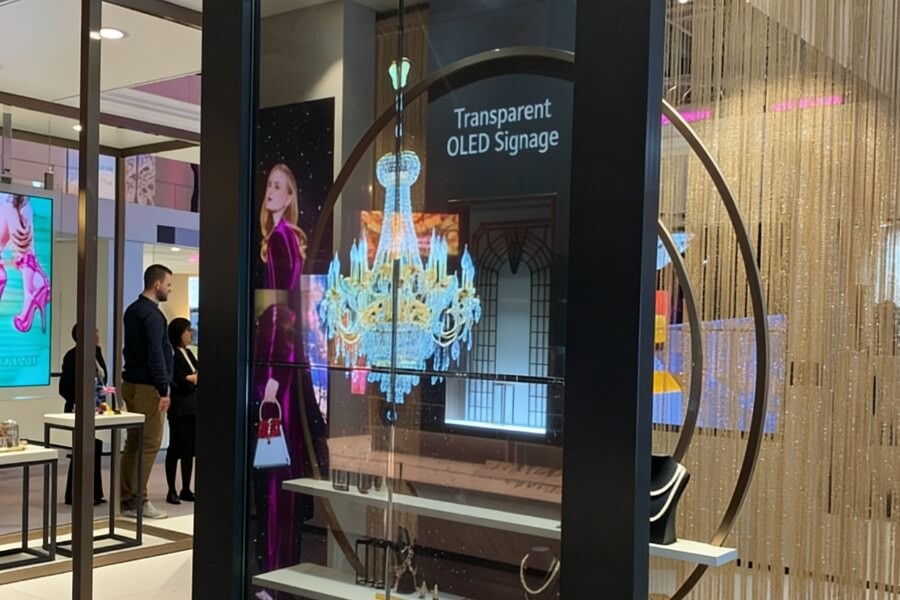
Transparent displays are increasingly used in retail storefronts, transportation hubs, and exhibition spaces.
These displays allow digital content to appear while maintaining visibility through glass surfaces.
RUSINDISPLAY focuses on these types of installations by combining transparent OLED technology with traditional LCD display systems.
Challenges for Outdoor LCD Displays
Outdoor displays must withstand extreme temperatures, strong sunlight, and environmental exposure.
High brightness panels and reliable thermal management systems are essential for stable outdoor performance.
How to Choose the Right LCD Interface
Selecting the correct display interface depends on resolution requirements, transmission distance, and system architecture.
Small embedded displays often use SPI because wiring is simple and power consumption is low.
Industrial control panels frequently use RGB or LVDS to achieve stable real time image updates.
Large digital signage systems often combine LVDS or eDP internal connections with HDMI or DisplayPort external input.
Understanding these differences helps engineers select interfaces that match the operating environment of the display system.
Future Trends in Display Interface Technology
Display interface technologies will continue evolving as display resolution and application complexity increase.
Unified Interface Development
USB-C is becoming a universal connection standard capable of transmitting video data, power, and communication signals through a single cable.
Wireless Display Connectivity
Wireless video transmission technologies may reduce cable requirements in temporary installations and flexible display environments.
AI Enabled Display Systems
Artificial intelligence can improve display system monitoring and predictive maintenance in large digital signage networks.
Growth of Transparent Display Applications
Transparent display technology will continue expanding across retail, transportation, and architectural design environments.
RUSINDISPLAY continues investing in transparent display solutions to support next generation commercial display installations.
FAQ
Q1: Can SPI transmit video data?
SPI bandwidth is generally too limited for continuous video streaming because the interface was designed for command communication rather than high speed pixel transmission. However intelligent display modules with internal frame buffers can render graphics locally while receiving control instructions through SPI.
Q2: How should engineers choose between LVDS and eDP?
LVDS remains widely used in industrial displays because differential signaling provides stable communication and strong resistance to electromagnetic interference. eDP supports higher bandwidth and improved power efficiency, making it suitable for newer high resolution display systems and modern digital signage platforms.
Q3: Why is RGB rarely used for large displays?
RGB interfaces require many parallel signal lines. As resolution increases the number of signals and clock speeds also increase, which can create signal integrity problems. Differential interfaces such as LVDS provide more stable transmission for larger displays.
Q4: Is MIPI suitable for industrial systems?
MIPI can be used in industrial systems when compact design and high bandwidth are required. Engineers must evaluate panel supply availability because many consumer grade MIPI panels have shorter product lifecycles than traditional industrial display modules.
Q5: What is required for USB-C single cable display connection?
USB-C display connections require the host device to support DisplayPort Alt Mode. The cable must support high speed video transmission and the display must support USB-C power negotiation. When these conditions are met a single cable can transmit video, data, and electrical power simultaneously.
RUSINDISPLAY delivers professional OLED, Transparent Display, and Indoor LCD solutions designed for commercial environments. Our systems are used in retail spaces, digital signage networks, and architectural installations where reliability, visual clarity, and installation flexibility are essential. With experience across multiple industries, RUSINDISPLAY focuses on building display systems that combine stable hardware, adaptable installation structures, and long term operational reliability.