




Introduction
Glass is one of the most important materials in a TFT LCD display, yet it often receives little attention compared with resolution, brightness, or contrast. Every image on an LCD screen depends on the stability, transparency, and precision of the glass substrate that supports the display structure.
In TFT LCD displays, specialized display glass serves as the structural substrate that enables pixel control, light transmission, and long-term mechanical stability. The glass layers hold the thin-film transistor array, the liquid crystal layer, and the color filter system in precise alignment.
Understanding the different types of display glass helps system integrators, commercial display buyers, and engineers select the right technology for their applications. From digital signage to large indoor video walls, glass properties affect performance in real-world environments.
How Glass Supports the Structure of TFT LCD Displays
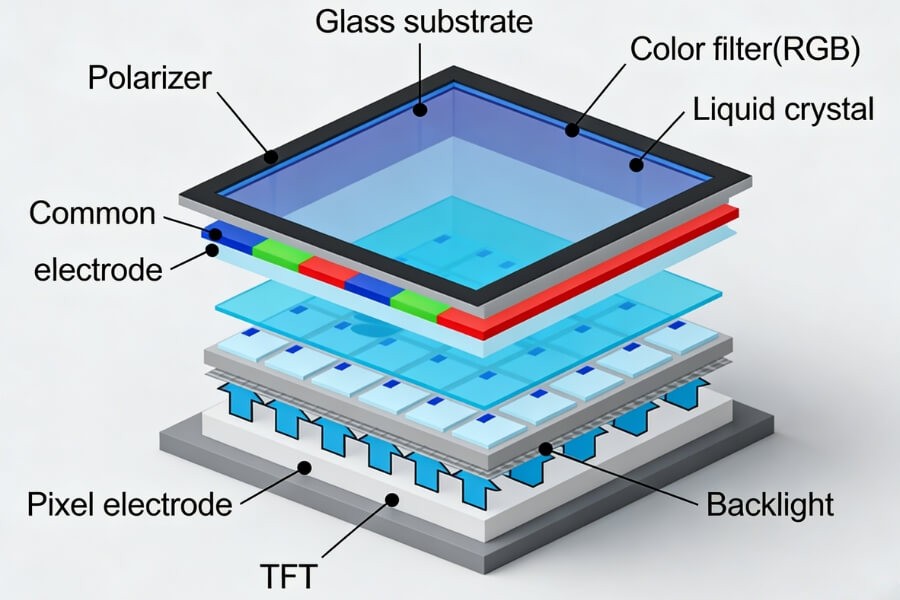
A TFT LCD panel typically uses two glass substrates to form the core display structure. These glass layers enclose the liquid crystal material and support the electronic circuitry that controls each pixel.
Typical TFT LCD glass structures consist of two precisely aligned glass substrates. One substrate carries the TFT array that controls pixel switching, while the other contains the color filter layer. Together they form the optical chamber where liquid crystal molecules regulate light transmission to create images.
The lower glass layer carries the thin-film transistor array. These microscopic transistors regulate electrical signals that control the orientation of liquid crystal molecules. The upper glass layer contains the color filter system that converts white backlight into red, green, and blue subpixels.
Glass substrates must deliver several critical characteristics.
- High optical transparency to support efficient light transmission
- Extreme surface flatness for accurate TFT deposition
- Thermal stability during manufacturing processes
- Mechanical strength to protect delicate internal components
Without high-quality glass, displays would suffer from uneven brightness, pixel defects, and structural instability.
Common Glass Materials Used in TFT LCD Displays
Different display applications require different glass materials. The choice of glass depends on strength, thermal stability, cost, and optical performance.
Soda Lime Glass
Soda lime glass is the most widely used and cost-effective display glass material.
It is produced using silica sand, sodium carbonate, and calcium oxide. The manufacturing process is mature and scalable, which keeps production costs low.
Key characteristics include
- Mohs hardness around 5
- Good optical transparency
- Easy processing and shaping
However, soda lime glass has lower mechanical strength compared with advanced glass compositions. It is typically used in basic display devices where impact resistance is not a primary concern.
Common applications include entry-level LCD modules, simple control interfaces, and low-cost consumer electronics.
Aluminosilicate Glass
Aluminosilicate glass offers significantly higher strength and chemical resistance than soda lime glass.
Its composition includes aluminum oxide combined with silica. This structure responds well to chemical strengthening processes, which increase durability and scratch resistance.
Because of its strength and optical clarity, aluminosilicate glass is widely used for touch display cover lenses, automotive displays, industrial control panels, and high-end commercial display systems.
Lithium Aluminosilicate Glass
Lithium aluminosilicate glass is designed for high-performance display environments.
This material allows deeper ion exchange during chemical strengthening, creating a thicker compressive stress layer. The result is improved drop resistance and higher mechanical strength while maintaining thin structures.
This type of glass is often used in high-end mobile electronics, automotive dashboards, and rugged handheld devices.
Alkali Free Glass
Alkali free glass plays a critical role in TFT LCD manufacturing.
Unlike conventional glass materials, it does not contain alkali metal ions such as sodium or potassium. This prevents ion migration during high-temperature manufacturing processes.
Ion migration can interfere with thin-film transistor performance. Alkali free glass prevents this issue and ensures stable electrical behavior during panel fabrication.
Because of its stability, alkali free glass is commonly used as the primary substrate for TFT array production in professional display panels.
How Display Glass Is Strengthened
Display glass can be strengthened after manufacturing to improve durability and reliability.
Two primary strengthening methods are widely used in modern display production.
Thermal Strengthening
Thermal strengthening, often called tempering, increases glass strength through controlled heating and rapid cooling.
The glass is heated to high temperatures and then cooled quickly using air jets. This process creates compressive stress on the glass surface, improving impact resistance.
Thermal strengthening is cost-effective but may introduce minor optical distortion. It is often used where glass thickness is not a major design constraint.
Chemical Strengthening
Chemical strengthening is commonly used in modern display technology.
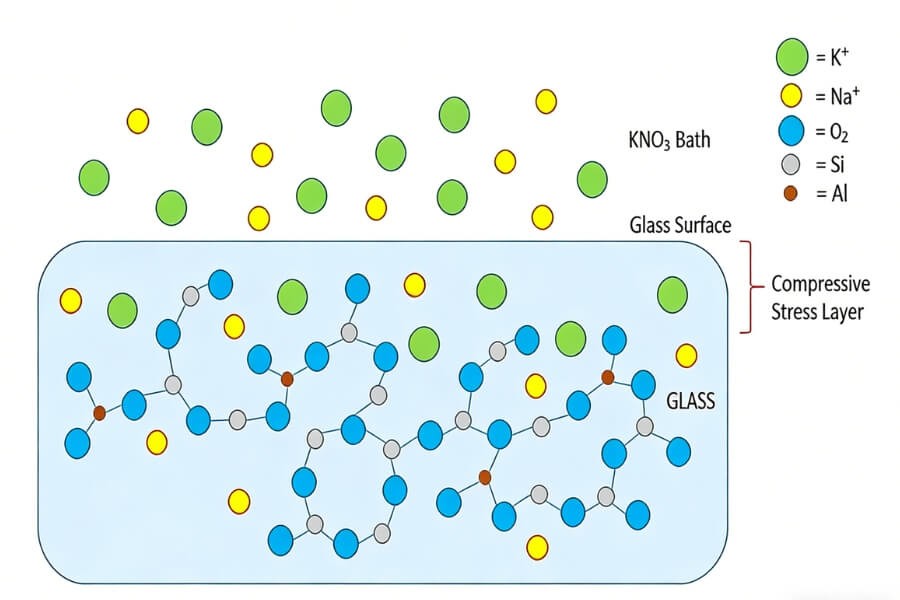
The process involves immersing glass in a molten potassium salt bath. During ion exchange, smaller sodium ions are replaced by larger potassium ions, forming a strong compressive surface layer.
Chemical strengthening can increase glass strength five to eight times compared with untreated glass. It also allows ultra-thin glass structures while maintaining excellent optical clarity.
Surface Coatings That Improve Display Glass Performance
Beyond mechanical strength, display glass can be enhanced with specialized surface coatings that improve optical performance.
Anti Glare Coating
Anti glare coatings reduce reflections by converting mirror-like reflections into scattered light. This improves readability in environments with strong ambient lighting such as retail storefronts or outdoor signage.
Anti Reflective Coating
Anti reflective coatings reduce surface reflections through multi-layer optical films. Lower reflection improves light transmission and increases display contrast, especially in high-brightness commercial displays.
Anti Fingerprint Coating
Anti fingerprint coatings create an oleophobic surface that resists oils and smudges. These coatings are valuable for interactive displays where users frequently touch the screen.
Applications include digital kiosks, interactive signage, and wayfinding systems.
How to Choose the Right Glass for Different Display Installations
Glass selection affects display durability, brightness efficiency, and long-term reliability in commercial environments such as retail stores, shopping malls, exhibition halls, and transportation hubs.
Freestanding Displays
Freestanding displays are exposed to direct user interaction and potential impact.
Recommended solutions include chemically strengthened glass with a thickness around three millimeters combined with anti fingerprint coatings to maintain surface cleanliness.
Wall Mounted Displays
Wall mounted digital signage prioritizes image clarity and structural efficiency.
Typical configurations include chemically strengthened glass around two millimeters thick with anti reflective coatings to improve visibility and reduce environmental reflections.
Interactive Displays
Interactive digital systems require higher surface durability due to frequent touch interaction.
Glass used in these displays typically features Mohs hardness above 7 along with anti fingerprint coatings and optical bonding to improve structural stability.
Future Developments in Display Glass
Display glass technology continues to evolve as demand for advanced display systems increases.
Ultra thin glass is becoming more common in large digital signage systems because it reduces weight while maintaining structural integrity. This helps simplify installation and transportation.
Transparent display technologies are also expanding rapidly. Transparent OLED and transparent LCD displays rely on specialized glass substrates that maintain high light transmission while concealing electronic circuits.
Future display glass may also integrate sensors, antennas, and other electronic components directly into the glass structure. This integration allows displays to function as intelligent interfaces that combine information, interaction, and environmental sensing.
Conclusion
Glass plays a foundational role in TFT LCD displays. From supporting the thin-film transistor array to protecting the liquid crystal layer, the glass substrate determines the structural stability and optical performance of the display.
Different glass materials provide different advantages. Soda lime glass offers cost efficiency, while aluminosilicate and lithium aluminosilicate glass deliver higher strength. Alkali free glass ensures reliable transistor performance during panel manufacturing.
Strengthening processes and optical coatings further enhance durability and viewing quality. When combined with proper installation design, the right glass solution enables stable performance across a wide range of commercial display environments.
Glass selection also plays an important role in the clarity and reliability of modern digital signage systems.
RUSINDISPLAY develops professional OLED, Transparent Display, and Indoor LCD solutions designed for commercial environments such as retail spaces, exhibition halls, and architectural installations. Our display systems combine reliable panel technology, precision structural design, and stable long-term performance trusted by more than 120 global brands.
Whether used for digital signage, interactive displays, or transparent installations, RUSINDISPLAY solutions help businesses create clear, durable, and visually engaging display environments while maintaining efficient system operation.
FAQ
Q1: What is TFT glass?
TFT glass refers to the specialized glass substrate used in TFT LCD panels. It supports the thin-film transistor array that controls pixel switching and image formation. High-quality TFT glass must provide excellent surface flatness, optical transparency, and thermal stability to ensure reliable display performance and consistent image quality.
Q2: What types of glass are used in TFT LCD displays?
TFT LCD displays commonly use soda lime glass, aluminosilicate glass, lithium aluminosilicate glass, and alkali free glass. Each material provides different advantages in strength, thermal stability, and manufacturing compatibility depending on the display application.
Q3: How does glass strengthening improve display durability?
Glass strengthening increases resistance to impact and scratches. Thermal tempering creates compressive stress through rapid cooling, while chemical strengthening uses ion exchange to produce a stronger surface layer. These processes allow display glass to remain thin while maintaining durability in commercial display installations.
Q4: Is TFT LCD better than OLED for commercial displays?
TFT LCD and OLED serve different purposes. TFT LCD displays often provide higher brightness, longer lifespan, and lower cost for large digital signage installations. OLED offers higher contrast and thinner panel structures, but TFT LCD remains a practical choice for many commercial display environments.