




Modern commercial displays rely on precise material engineering. Retail video walls, digital signage networks, and transparent display installations all depend on stable display panels that deliver consistent brightness and responsive control.
Behind these displays sits a critical component that is rarely visible to users — ITO glass.
ITO glass forms the transparent electrode layer inside LCD modules. It allows electrical signals to control pixels while still transmitting light from the backlight system. This balance between conductivity and transparency makes it one of the most important materials in modern display technology.
Understanding how ITO glass works helps integrators, designers, and procurement teams make better decisions when selecting LCD display solutions.
What Is ITO Glass
ITO stands for Indium Tin Oxide, a transparent conductive oxide used in many electronic devices.
The material is typically composed of around 90 percent indium oxide and 10 percent tin oxide.
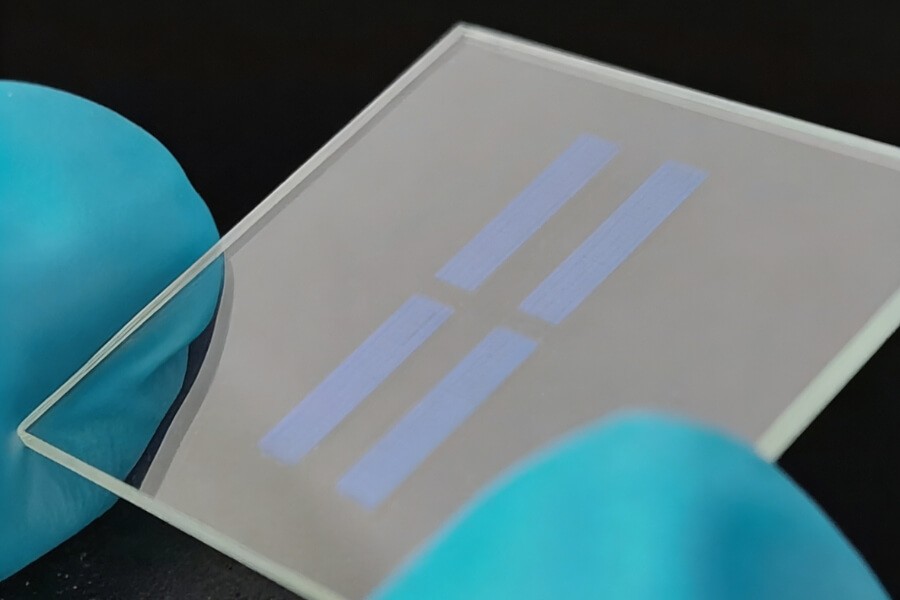
When deposited as a thin film on glass, this compound creates a surface that conducts electricity while remaining transparent to visible light.
Most metals conduct electricity efficiently but block light. Transparent materials allow light to pass but usually lack electrical conductivity. ITO solves this challenge by combining both properties in a single material layer.
Because of this unique balance, ITO coatings are widely used in
- LCD panels
- OLED displays
- Touchscreens
- Solar cells
- Smart windows
Why LCD Modules Use ITO Glass
LCD technology controls images by manipulating liquid crystal molecules. These molecules change orientation when an electric field is applied.
ITO glass acts as the transparent electrode that creates this electric field.
The structure works in three steps
1 Electrical signals are applied to the ITO electrodes
2 The electric field changes the orientation of liquid crystal molecules
3 The change in molecular orientation controls how much light passes through the display
Because the electrode layer is transparent, it does not block the backlight. The result is a display that can control millions of pixels while maintaining high brightness.
This design allows LCD modules to produce stable images with low power consumption.
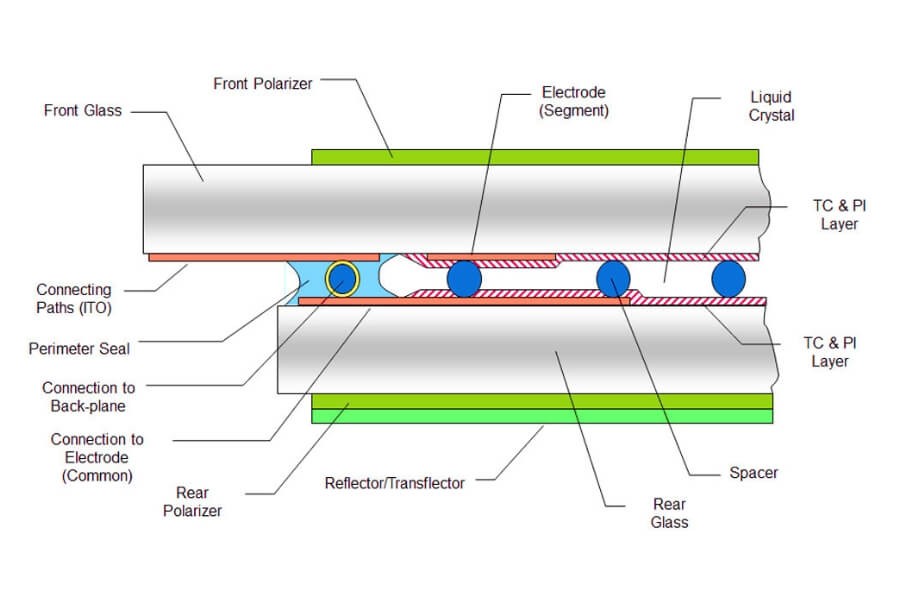
Structure of an LCD Panel Using ITO Glass
An LCD panel contains multiple layers that work together to produce visible images.
A simplified structure includes
1 Top polarizer
2 ITO coated glass substrate
3 Liquid crystal layer
4 Color filter layer
5 Backlight unit
6 Bottom polarizer
ITO coatings are deposited directly onto the glass substrates within the panel.
These layers form the electrical network that drives each pixel. Each electrode pattern corresponds to a specific pixel or subpixel region, allowing precise control across the display surface.
As display resolutions increase, the precision of ITO electrode patterning becomes increasingly important.
Key Properties of ITO Glass
ITO coatings used in display panels must achieve a precise balance between optical transparency and electrical conductivity.
Typical parameters include
- Film thickness around 100–150 nm
- Visible light transmission above 85 percent
- Sheet resistance typically between 10 and 20 ohms per square
- Operating temperature commonly between −40°C and 85°C
High transparency allows more light to pass through the display. This improves brightness and reduces the energy required from the backlight system.
Low sheet resistance ensures electrical signals reach every pixel quickly. This supports stable refresh rates and consistent brightness across the screen.
Uniform coating thickness across the glass substrate is also critical. Variations can cause uneven brightness or color inconsistencies.
Why ITO Film Thickness Matters
ITO film thickness has a direct impact on display performance.
Thicker coatings improve electrical conductivity but reduce optical transmission. Thinner coatings improve transparency but increase electrical resistance.
Maintaining the correct balance is essential.
Most LCD panels use ITO coatings between about 100 nanometers and 150 nanometers. This range provides strong electrical performance while maintaining high light transmission.
Manufacturers control this thickness carefully during the deposition process to ensure uniform performance across the entire panel.
How ITO Glass Is Manufactured
ITO films are typically deposited using magnetron sputtering, a vacuum deposition process widely used in the display industry.
The process involves several steps
1 A glass substrate is placed inside a vacuum chamber
2 Argon plasma is generated inside the chamber
3 ITO target material is bombarded by ions
4 Ejected particles deposit onto the glass surface as a thin film
This method allows manufacturers to produce highly uniform coatings across large glass panels.
Precise process control ensures consistent thickness, conductivity, and optical transmission.
Large LCD fabrication facilities use advanced sputtering systems capable of coating glass substrates exceeding two meters in width.
Challenges When Using ITO in Large Displays
Large commercial displays introduce additional engineering challenges.
Uniform Electrical Performance
Video walls combine multiple LCD panels to create a larger display surface. If ITO coatings vary between panels, brightness differences can appear along the seams.
Manufacturers must maintain strict quality control to ensure uniform film properties.
Electrical Signal Distribution
Large panels require electrical signals to travel longer distances across electrode networks. Maintaining low sheet resistance ensures pixels respond quickly and evenly.
Thermal Expansion Differences
ITO and glass expand at different rates when temperatures change. This can create mechanical stress within the coating.
To improve adhesion and stability, manufacturers often apply silicon dioxide buffer layers between the glass and the ITO film.
Environmental Durability
Outdoor displays must operate under humidity, temperature changes, and extended operating hours. Stable ITO coatings help ensure reliable long-term performance.
ITO Glass in Transparent and Interactive Displays
ITO technology also supports newer display formats.
Transparent Displays
Transparent LCD and OLED displays rely on transparent electrodes that allow light to pass through the panel.
Applications include
- Retail storefront windows
- Museum exhibits
- Exhibition displays
- Architectural installations
These displays allow digital content to appear while maintaining visibility behind the screen.
Interactive Touch Displays
ITO films are widely used in capacitive touch sensors.
Electrode grids detect small changes in electrical capacitance when a finger touches the display surface. These signals allow the system to determine the precise touch location.
Stable conductivity ensures accurate and responsive touch performance.
ITO Compared With Other Transparent Conductive Materials
Several alternative transparent conductors are being researched. However, ITO remains the dominant material in large display panels.
- ITO offers high transparency and stable conductivity
- Silver nanowires provide flexibility but can introduce optical haze
- Graphene offers excellent flexibility but remains expensive to manufacture at scale
- Conductive polymers are inexpensive but typically provide lower conductivity
At present, ITO offers the most balanced combination of cost, optical performance, and electrical stability for large-area displays.
Why ITO Quality Matters for Commercial Displays
The quality of the ITO layer directly affects real-world display performance.
High-quality coatings support
- consistent brightness across large screens
- stable color performance
- reliable long-term operation
Displays used in retail environments, transportation hubs, and commercial buildings often operate continuously for extended periods. Stable electrode layers help maintain image quality and reduce maintenance requirements.
For integrators and project planners, selecting panels with reliable ITO coatings is an important factor in ensuring long-term display stability.
The Role of Advanced Display Engineering
Reliable commercial display systems require both advanced materials and thoughtful engineering.
RUSINDISPLAY develops OLED, Transparent Display, and Indoor LCD solutions designed for real commercial environments. Our engineering approach focuses on stable display structures, reliable panel integration, and efficient visual communication systems.
From transparent retail installations to large LCD video walls, our display solutions help businesses create engaging visual environments while maintaining dependable long-term performance.
FAQ
Q1: What is the role of ITO glass in LCD modules?
ITO glass serves as a transparent electrode inside LCD panels. It applies electric fields across the liquid crystal layer, allowing the display to control light transmission at each pixel. Because the electrode remains transparent, the backlight can pass through without reducing screen brightness.
Q2: Is ITO glass conductive?
Yes. ITO is a transparent conductive oxide that allows electrical current to flow across the glass surface while maintaining high optical transparency. This combination of conductivity and transparency makes it essential for LCD panels, touchscreens, and other transparent electronic devices.
Q3: What is the difference between ITO and FTO?
ITO provides higher electrical conductivity and better optical transparency, which is why it is widely used in LCD displays and touchscreens. FTO, or fluorine-doped tin oxide, offers better resistance to high temperatures and is more commonly used in solar energy applications.
Q4: Why does ITO crack in flexible displays?
ITO is a brittle ceramic material with limited flexibility. When bending strain exceeds about 1.2 percent, microscopic cracks can form in the coating. Flexible display technologies often combine ITO with alternative conductive materials to improve mechanical durability.