




Introduction: Brightness – The Key to Standing Out in Commercial Displays
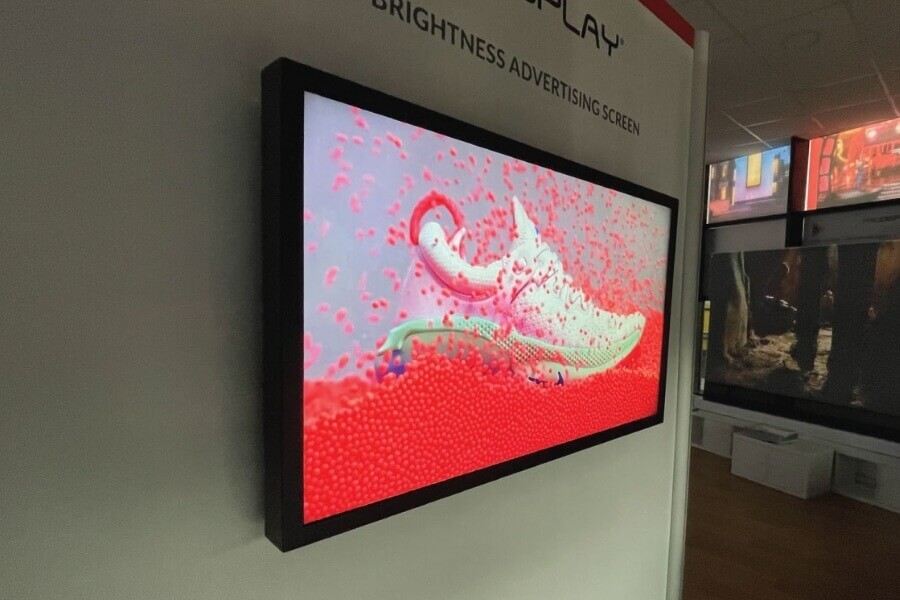
In commercial settings like retail windows, brand showrooms, and large advertising billboards, the brightness of display equipment is a critical factor for attracting attention, conveying messages, and shaping brand identity.
A key challenge arises when displays need to be visible under strong ambient lighting, such as mall lighting or direct sunlight. How can we ensure the clarity of LCD content in such environments? The answer lies in optimizing the LED backlight system.
RUSINDISPLAY offers solutions to these visual challenges through products like the Freestanding Digital Series and Wall-mounted Digital Series. These product lines are specifically designed with advanced backlight engineering, offering exceptional brightness and reliability.
Core Technologies: Four Key Pillars of Commercial LCD Backlight Systems
1. LED Light Source: The Foundation of Brightness and Efficiency
The LED light source is where the journey toward high brightness begins. High-efficiency LED chips, including dual-chip packaging, significantly enhance brightness without increasing power consumption. Dual-chip LEDs, in particular, provide greater luminous output, leading to higher brightness and better energy efficiency.
2. Optical Architecture: Guiding Light for Maximum Impact
The optical components in an LCD backlight system ensure the even distribution of light. Light Guide Plates (LGP), Brightness Enhancement Films (BEF), diffuser films, and high-efficiency reflectors work together to evenly distribute light, ensuring a uniform and bright display. These components maximize light output, reducing wasted energy.
3. Power and Driving: Ensuring Stable Brightness
A constant current driver (CC Driver) is key to maintaining steady brightness. In high-end applications, Pulse Width Modulation (PWM) dimming technology adjusts brightness, ensuring long-term stability. This process prevents flickering and overloads, resulting in smoother, more reliable performance.
4. Thermal Management: The Cornerstone of Reliability
High brightness levels lead to higher thermal density, particularly in high-traffic environments like video walls. Effective heat dissipation is crucial for maintaining consistent brightness and prolonging the lifespan of the display. Solutions such as metal backplates, thermal channels, and active cooling systems help manage heat and prevent overheating, ensuring the longevity of the LEDs and the overall system.
RUSINDISPLAY provides integrated design solutions for projects like the Interactive Digital Series, combining these four pillars to achieve maximum light efficiency from source to output, ensuring performance even in challenging environments.
Achieving High Brightness: Comparing Five Effective Strategies
1. Enhancing the Light Source Quality
Using higher-efficiency LED chips or dual-chip LEDs is the most straightforward way to increase brightness. Dual-chip solutions provide greater brightness without requiring additional LEDs, making them an efficient choice for achieving high brightness levels.
2. Optimizing the Power Supply
Increasing the driving current (within safe limits) boosts brightness. However, it is important to balance this with proper thermal management to avoid overheating. This tradeoff between current, brightness gain, and heat must be carefully considered to maintain LED lifespan.
3. Improving Optical Efficiency
Upgrading optical components such as BEF and reflectors can improve the light output by 30%–60% without increasing energy consumption. These changes ensure that light is focused effectively, improving both brightness and uniformity.
4. Strengthening Thermal Management
Thermal management solutions like heat sinks and thermal pads are essential to handle the extra heat generated by increased brightness. Proper cooling systems prevent overheating, which can otherwise lead to faster degradation of the LEDs and reduce overall display lifespan.
5. Optimizing System-Level Layout for Uniformity
For large displays or irregularly shaped screens, increasing the LED density and optimizing their arrangement ensures even brightness across the entire surface. Collaborating with light guide plate design helps achieve consistent brightness levels, especially in large-scale or unusual display shapes.
RUSINDISPLAY evaluates all of these strategies when designing custom solutions, ensuring that the balance between brightness, stability, and cost-efficiency is optimized for every project.
Beyond Brightness: Building Reliable, Long-Lasting Display Systems
Collaborating with LCD Panels for Better Light Transmission
TFT panels with high transmittance (such as LTPS technology) ensure more light passes through the backlight layer, improving overall display brightness. By minimizing light loss through the panel structure, we achieve better energy efficiency and brightness output.
Optical Bonding and Anti-Reflection Technologies
Optical bonding reduces internal reflection, enhancing contrast and heat dissipation. Additionally, Anti-Reflection (AR) and Anti-Glare (AG) glass coatings improve readability by reducing glare from ambient light, making the display more visible in various lighting conditions.
Smart Brightness Adjustment for Energy Efficiency and Performance
Ambient light sensors (ALS) and Content Adaptive Brightness Control (CABC) adjust display brightness automatically based on environmental factors. This intelligent system ensures the display remains visible in daylight while conserving energy when not needed, providing an efficient balance of performance and energy usage.
Innovative Case Study: Luxury Retail Window Interactive Video Wall
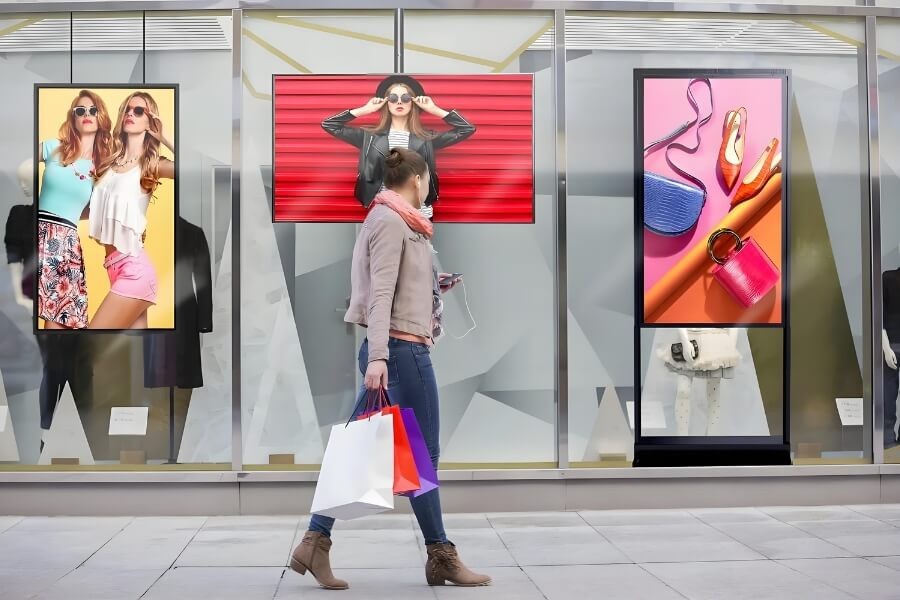
A luxury retail store uses an interactive video wall to combat the strong sunlight streaming through windows during the day. With a high-brightness backlight and AR glass, the display automatically adjusts to optimal brightness levels. This system attracts customers and maintains a comfortable viewing experience.
RUSINDISPLAY integrates hardware with intelligent sensors and content management software, providing businesses with seamless, plug-and-play digital solutions.
The Future of High-Brightness Displays: Trends and Innovations
The Rise of Mini-LED Backlighting
Mini-LED technology, which uses thousands of smaller LEDs for local dimming, enables high brightness, contrast, and superior HDR effects. It offers a promising solution for digital billboards and premium showrooms, setting a new standard for the next generation of commercial displays.
AI and Display Integration
Artificial Intelligence (AI) can dynamically adjust brightness, color temperature, and content based on environmental light, foot traffic, or viewer attention. This intelligent system allows for more energy-efficient and personalized content delivery, transforming the way commercial displays function.
Conclusion: A Systemic Approach to Achieving Superior Commercial Display Brightness
Creating excellent commercial display brightness is no longer just about “making it brighter.” It’s about the integration of light sources, optics, driving systems, thermal management, panel design, and intelligent control. This comprehensive approach requires display solution providers to possess the technical capabilities needed to address all aspects of display performance.
RUSINDISPLAY provides end-to-end solutions, whether it's a transparent OLED solution for ultimate transparency or an indoor LCD solution requiring high brightness. We offer technical consulting, custom design, and system integration for all your commercial display needs.
FAQ
Q1: What are the three primary techniques to increase backlight brightness?
- Using high-efficiency LED chips (or dual-chip LEDs);
- Optimizing optical films (such as advanced BEF);
- Increasing driver current within safe limits, while ensuring thermal management.
Q2: Why is thermal management critical for high-brightness backlighting?
Excessive heat can degrade LED efficiency and shorten lifespan. Proper thermal management prevents brightness decay, color shift, and ensures stable long-term performance, making it essential for high-brightness systems.
Q3: How do high-brightness LCDs used for outdoor or window applications differ from regular indoor displays?
Outdoor displays typically require brightness levels of ≥1000 nits. They also need specialized thermal and sealing designs to withstand direct sunlight, extreme temperatures, and to offer rugged, weather-resistant construction.
Q4: What is a Transflective LCD, and is it suitable for all high-brightness environments?
A Transflective LCD adds a reflective layer above the backlight, utilizing ambient light to assist with illumination. While power-efficient and effective for outdoor use, its lower contrast and color saturation make it unsuitable for applications requiring high-quality graphics or video.
Q5: When planning a large-scale video wall project, what should be prioritized besides brightness?
Brightness uniformity and long-term consistency are key. Ensuring all panels maintain consistent color and brightness over time requires precise LED selection and robust thermal management to avoid color shifts and brightness decay.