




Exploring the Latest Smart Bedroom Display Technologies
Transparent OLED Displays: The Future of Seamless Viewing
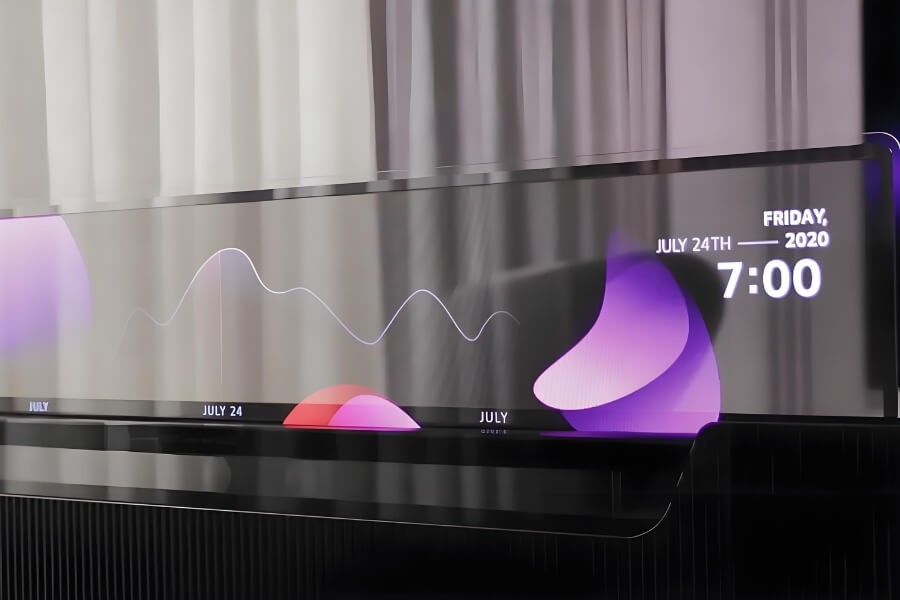
Transparent OLED displays represent a breakthrough in display technology, offering 40% transparency while still delivering high-definition images. These displays, when not in use, function as semi-transparent mirrors, maintaining their reflective surface when powered off. However, when activated, they present crystal-clear visuals while still allowing light to pass through.
- Hidden Design: Transparent OLEDs are designed to be hidden when not in use. They can be installed in bed frames, walls, or furniture, offering minimal visual clutter when they’re not needed.
- Ideal for Smart Homes: This display technology is perfect for spaces that require both functionality and elegance, allowing it to blend seamlessly with a smart home environment while offering real-time data display and entertainment.
Mirror TVs: A Dual-Function Solution for Stylish Spaces
A Mirror TV consists of a combination of an LCD/OLED screen and a semi-transparent dielectric mirror. It serves dual functions—acting as a mirror when turned off and as a TV screen when activated.
- Space-Saving: The Mirror TV is ideal for spaces where you want to save room, especially in areas like bathrooms, bedrooms, and luxury hotels. It blends perfectly into interiors, serving as both a functional piece of furniture and an entertainment source.
- Environmentally Integrated: Often used in high-end settings such as spas and gyms, Mirror TVs integrate voice control, smart lighting, and home automation features, contributing to a modern and high-tech atmosphere.
Large-Screen Displays and Video Walls: Creating Immersive Experiences
Large-screen displays and video walls are modular systems that can be customized to suit various dimensions and shapes. These systems offer high brightness and wide viewing angles, making them perfect for both commercial displays and immersive bedroom audio-visual systems.
- Interactive Technology: These systems can integrate touch control and AI vision, enhancing user interaction and providing a highly immersive experience.
- Versatility: Whether for commercial advertising or personal entertainment, video walls provide stunning visuals and can be tailored to meet specific design needs.
Real-World Applications of Smart Bedroom Displays
Sleep and Health Monitoring: Your Personal Wellness Hub
Transparent OLED displays offer a unique advantage in the smart bedroom by seamlessly integrating health and sleep monitoring systems. For instance, these displays can show real-time sleep quality data, heart rate, and breathing patterns.
- Mirror TVs in Bathrooms: In bathrooms, Mirror TVs can be paired with health monitoring features such as body posture analysis, providing a more holistic approach to personal care and well-being.
Entertainment and Immersion: Making Your Bedroom a Theater
When it comes to entertainment, the right display size and technology can make all the difference. For example, a 32–43-inch TV is ideal for bedrooms where the viewing distance is about 5–7 feet, while larger displays from 50–65 inches are perfect for larger rooms or farther viewing distances.
- 4K HDR and Smart Systems (Android TV/Apple TV) can provide an elevated viewing experience. These systems also support multi-channel audio integration, ensuring both high-quality visuals and immersive sound.
- Hidden Design: For a clean and clutter-free bedroom, the hidden design of OLED and Mirror TVs helps maintain an organized and sleek space.
Smart Control and Environmental Integration: A Connected Space
Smart display systems can interact with other elements of a smart bedroom, such as lighting, curtains, and temperature controls. These systems often include voice control, gesture recognition, and smart sensors, providing a truly integrated and intuitive user experience.
- Centralized Information Hub: These displays can function as a home information hub, displaying daily schedules, weather updates, and notifications, ensuring that you stay connected with your environment without cluttering the space with multiple devices.
Choosing the Right Smart Bedroom Display System
How to Select the Perfect Display for Your Bedroom
Choosing the right display for your bedroom depends on several factors, such as the size of your space, your viewing distance, and your technological needs. Here are some points to consider:
- Define Your Needs: Are you looking for entertainment, health monitoring, or environmental control?
- Measure Your Space: Consider your viewing distance, wall size, and lighting conditions.
- System Compatibility: Ensure compatibility with existing smart home platforms.
- Installation and Maintenance: Determine if professional integration services are required.
Comparing Transparent OLED, Mirror TVs, and Traditional Screens
Here’s a quick comparison of the different smart display options:
| Technology Type | Advantages | Applicable Scenes | Considerations |
|---|---|---|---|
| Transparent OLED | High transparency, hidden design | Premium bedrooms, commercial displays | Higher cost, requires custom installation |
| Mirror TV | Dual function, space-saving | Bathrooms, gyms, hotels | Requires light management for daytime use |
| Traditional Large Screens/Video Walls | High brightness, customizable sizes | Media rooms, commercial ads | Complex installation, wiring planning required |
The Future of Smart Bedroom Displays: AI and Beyond
AI-Driven Displays: Personalized Content at Your Fingertips
AI can automatically adjust display content based on user habits. For instance, it can suggest morning news or pre-sleep meditation content.
- Emotional Recognition: AI can detect emotional states and adjust the lighting and display content accordingly, enhancing the overall atmosphere.
Integrated Health Management
By combining cameras and sensors, AI-driven systems can offer contactless health monitoring for parameters like heart rate and breathing. This data can then be visualized on the transparent OLED display.
- Seamless Integration: Health data can be synced with medical systems for a fully integrated health management system.
Revolutionizing Commercial Spaces with Transparent OLEDs
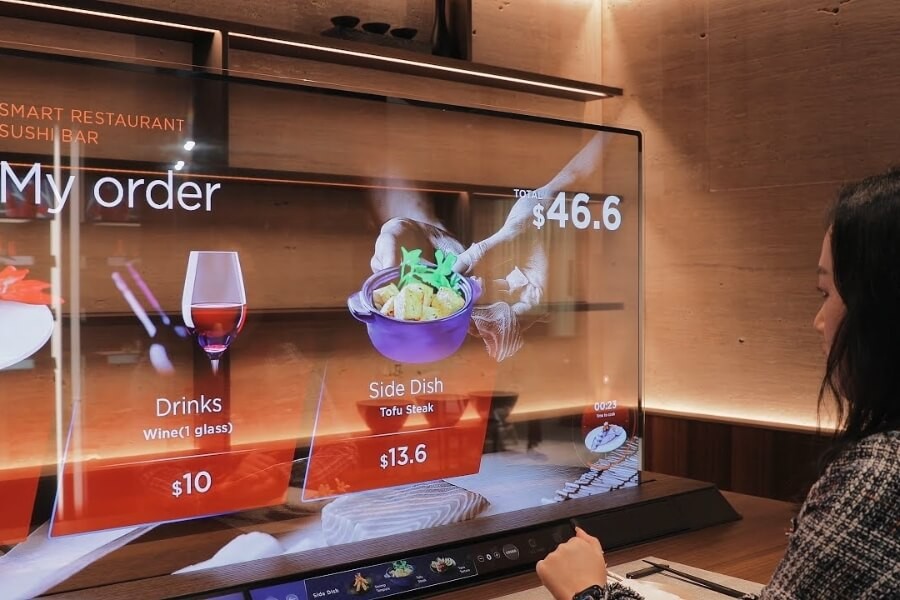
Transparent OLEDs are poised to revolutionize retail environments by acting as interactive storefronts, enhancing customer engagement. In hotel rooms, Mirror TVs can serve as both an entertainment screen and a room control interface.
RUSINDISPLAY has already implemented customized transparent OLED systems for high-end hotels and smart home showrooms, blending AI interaction with creative content to create visually stunning and innovative experiences.
Industry Case Studies: Smart Bedroom Solutions in Action
- High-End Hotel Bedroom Project: Transparent OLED embedded in the footboard of a bed, offering entertainment and sleep report functions. Mirror TV used in bathrooms as both a mirror and an entertainment screen.
- Smart Home Showrooms: Modular video walls display full-house control interfaces, while transparent OLEDs act as room dividers, dynamically showcasing product information.
- Health-Tech Spaces: Mirror TVs integrated with AI posture analysis, while transparent OLEDs display real-time environmental data and health recommendations.
RUSINDISPLAY has provided customized transparent OLED systems for various high-end projects, seamlessly integrating AI interaction and content creativity to create “technology as aesthetics” spaces.
FAQ
Q1: What practical uses does a transparent OLED screen have in a bedroom?
Transparent OLED screens serve as hidden TVs, display sleep data, and show environmental information like temperature and humidity. They can also add immersive light effects, offering functional and aesthetic value in both bedrooms and commercial spaces like retail windows or hotel rooms.
Q2: Where is the best place to install a Mirror TV in a bedroom?
Mirror TVs are ideal for minimalist bedrooms with limited space, such as bathroom walls (preferably waterproof and anti-fog models), wardrobe doors, or partition walls. Light control is essential, so using blackout curtains helps optimize viewing in bright daylight.
Q3: How does a customized transparent display system compare to traditional TVs?
Customized transparent display systems integrate seamlessly into furniture or walls, offering multi-screen setups and interactive features like touch and AI vision. They are ideal for high-end residential and commercial spaces, delivering a more sophisticated and immersive experience compared to traditional TVs.
Q4: How can AI technology enhance the smart bedroom experience when combined with transparent OLEDs?
AI enhances the smart bedroom by adjusting display content and brightness based on user behavior. It also enables non-contact health monitoring (heart rate, breathing), and device interactions, creating a smarter, more responsive living environment.
Q5: What should be considered when choosing a smart bedroom display system provider?
Choose a provider based on their expertise in full-stack technology integration, high-end customization, and experience with end-to-end support. Ensure the system is compatible with existing smart home platforms and is scalable for future needs.