




Selecting a display often begins with one central question. Readers want to understand the difference between LCD and OLED so they can choose the right solution for image performance, installation environments, and project durability. These two display technologies support most modern visual systems. Each offers strengths that align with different applications.
This guide explains how both systems generate light, compares their performance across real conditions, and connects those differences to practical use. The goal is to help project teams, integrators, and commercial buyers make confident decisions based on structure, environment, and long-term needs.
How LCD and OLED Produce Images
How LCD Uses Backlighting
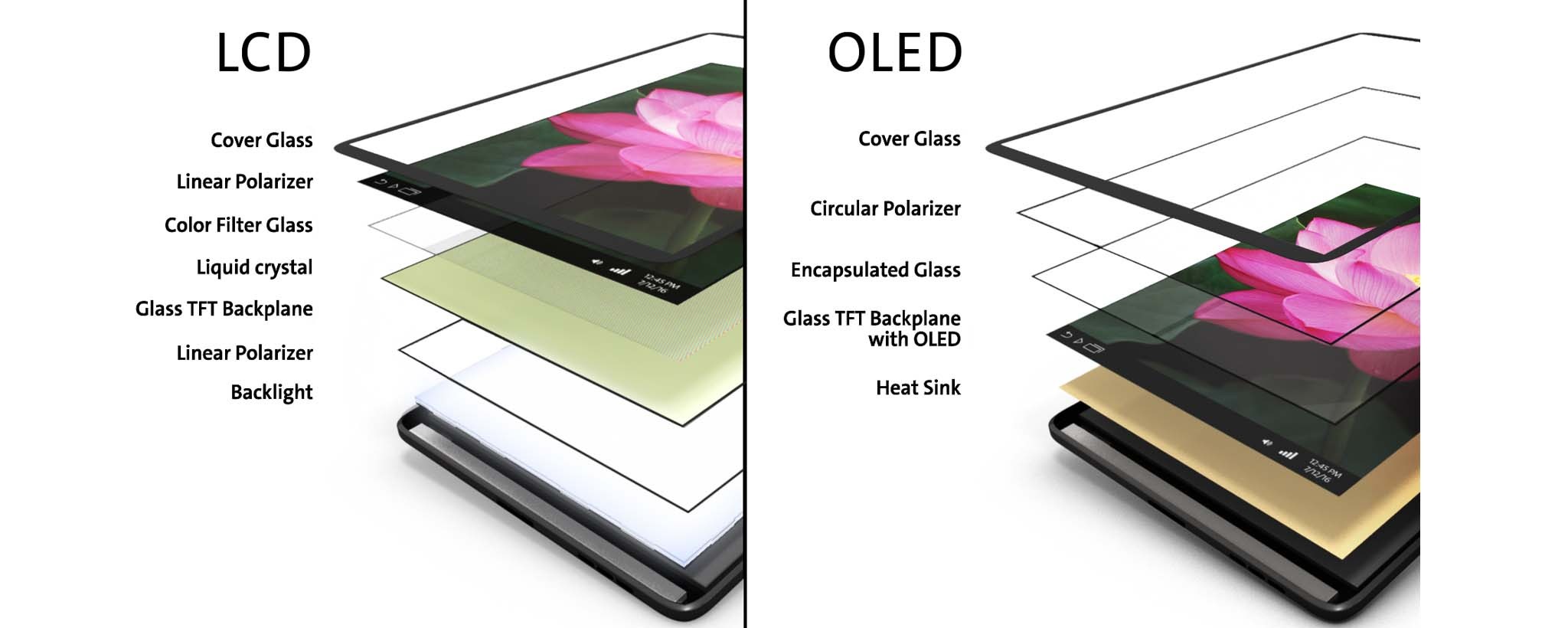
LCD displays depend on a light source behind the panel. This backlight, typically an LED array, shines through a liquid crystal layer. The crystals act like shutters that adjust how much light reaches the red, green, and blue filters. The backlight stays active across the screen, so LCD cannot produce true black. Dark areas appear as deep gray and bright objects may create a halo effect. The backlight module also increases panel thickness and rigidity.
How OLED Uses Self-Emitting Pixels
OLED, or Organic Light Emitting Diode, uses pixels that generate their own light. No backlight is required. Every pixel turns on or off independently. When a pixel switches off completely, it produces pure black with no stray illumination. This pixel-level control defines OLED’s high contrast and slim, flexible structure.
Comparing LCD and OLED Performance
Black Levels and Contrast
OLED leads this category. Pixels can turn off completely and create pure black. This improves depth in dark scenes and strengthens separation between bright and dim areas.
LCD cannot fully block the light behind each pixel. Even with Mini LED backlights that divide the screen into many dimming zones, some light spreads between zones. This limits overall contrast and may cause blooming. Mini LED improves performance but does not match pixel-level control.
Color Accuracy and HDR
OLED supports wide color ranges with strong saturation. HDR content appears vivid because bright and dark details coexist with minimal compromise.
LCD offers stable and natural color. Quantum Dot LCD models extend the color range and may approach the vibrancy of OLED while maintaining long-term consistency.
Viewing Angles
OLED maintains stable brightness and color from wide angles. The picture remains consistent even when viewed from the side.
LCD performance varies by panel type. IPS offers good off-axis consistency. VA increases dark detail but may shift color at angles. TN shows the most visible change.
Motion and Response Time
OLED responds quickly because pixel transitions occur at the pixel-emission level. Motion appears sharp with minimal blur. This benefits gaming, sports content, and dynamic graphics in commercial environments.
LCD continues to improve through Fast IPS and similar technologies. These panels offer high refresh performance but still do not reach OLED’s response timing.
Energy Use
Energy behavior depends on the image. OLED uses less power for dark or mixed scenes because black pixels use no energy. LCD uses a steady amount of energy because the backlight remains active. Bright full-screen content may be more efficient on LCD.
Lifespan and Long-Term Reliability
LCD provides strong durability. It does not experience burn-in and the backlight ages gradually.
OLED uses organic materials that degrade over time. Blue pixels age faster and can shift color balance. Static graphics may cause faint retention. Modern OLED designs include pixel shifting and compensation cycles that reduce the risk. Consistent content management further improves reliability.
Panel Structure and Thickness
OLED panels are thin and lightweight because they do not include a backlight module. They can bend or curve and support installations that require a minimal structural profile.
LCD panels are thicker and more rigid. This structure can improve durability during handling and installation.
Brightness and High-Ambient Conditions
LCD provides strong full-screen brightness and handles direct light well. This makes LCD suitable for bright rooms and sunlit environments.
OLED delivers high peak brightness in HDR scenes and continues to improve with Tandem OLED structures. Even so, LCD remains stronger when a project demands high performance in bright ambient settings.
Cost Considerations
LCD is cost-effective and available across a wide performance range. It is a strong match for large-format, budget-sensitive, or high-brightness projects.
OLED requires a more complex production process. It fits premium installations where visual performance and contrast depth matter most.
Choosing the Right Display for Your Project
When OLED Is the Better Fit
- projects that need strong contrast and pure black levels
- HDR content or film-focused environments
- motion-heavy content such as gaming or fast video
- installations where slim structures improve design integration
- premium interiors and controlled lighting conditions
When LCD Is the Better Fit
- budget-focused installations
- bright rooms or sun-exposed environments
- long operating hours without the risk of retention
- projects that need high brightness and stable color
- installations that benefit from Mini LED for enhanced contrast
Frequently Asked Questions
What is the main difference between LCD and OLED?
LCD uses an LED backlight that shines through liquid crystals. OLED uses self-emitting pixels that turn on or off independently. This structural difference determines contrast, black levels, viewing angles, and overall image behavior in real installations.
Is OLED more energy efficient?
OLED can use less power when displaying dark or mixed scenes because pixels switch off. LCD holds a constant backlight, which may be more efficient with bright full-screen content or high-ambient environments.
Why does OLED cost more?
OLED panels rely on organic light-emitting materials and a manufacturing process that requires greater precision. Lower production yields and material sensitivity increase the overall cost, positioning OLED as a premium display technology.
Which option is better for eye comfort?
OLED works well in dim rooms due to deeper contrast and lower overall glare. LCD performs better in bright spaces where higher full-screen brightness helps reduce eye strain during long viewing sessions.
Does OLED still experience burn-in?
Burn-in remains possible when static elements stay on-screen for extended periods. Modern compensation systems reduce this risk, and varied content layouts help maintain long-term image stability in daily operation.
What should gamers choose?
OLED delivers the strongest motion clarity and contrast for fast gameplay. Fast IPS LCD panels also provide high refresh performance and avoid retention concerns, making them reliable for competitive environments.
Which is better OLED or LCD?
OLED offers superior contrast, viewing angles, and motion performance. LCD provides higher brightness, longer lifespan, and stronger resistance to retention. The better choice depends on installation lighting, usage time, and project budget.
Which is better, OLED or QLED or LCD?
OLED delivers the deepest blacks and widest viewing angles. QLED enhances LCD with a Quantum Dot layer that boosts brightness and color range. Standard LCD remains the most cost-efficient. The right option depends on ambient light and visual goals.
Why RUSIN?
Transparent OLED plays an expanding role in retail design, architectural surfaces, automotive HUD systems, and next generation AR devices. RUSINDISPLAY supports these applications with stable OLED and Transparent Display systems built for long term performance. Our engineering approach focuses on optical clarity, practical installation, and responsive support. This helps businesses create visual layers that feel modern, balanced, and naturally integrated into their environments.